
Building below the water table: a waterproof basement near the Caribbean Sea
A PlayaBuilder construction case study from Playa del Carmen, in the Riviera Maya.
Building a basement just steps from the Caribbean Sea presents challenges that most residential construction projects never encounter. When our excavation reached the natural groundwater table, we needed to engineer a solution capable of protecting the structure against constant moisture exposure, groundwater pressure, and the corrosive coastal environment.
For this project, PlayaBuilder combined marine-grade concrete, neoprene insulation, and a premium waterproofing system to create a heavily protected underground structure designed for long-term durability.
The result demonstrates something we have believed since founding PlayaBuilder in 2005: exceptional construction quality is often determined by the work that nobody sees once the project is finished.
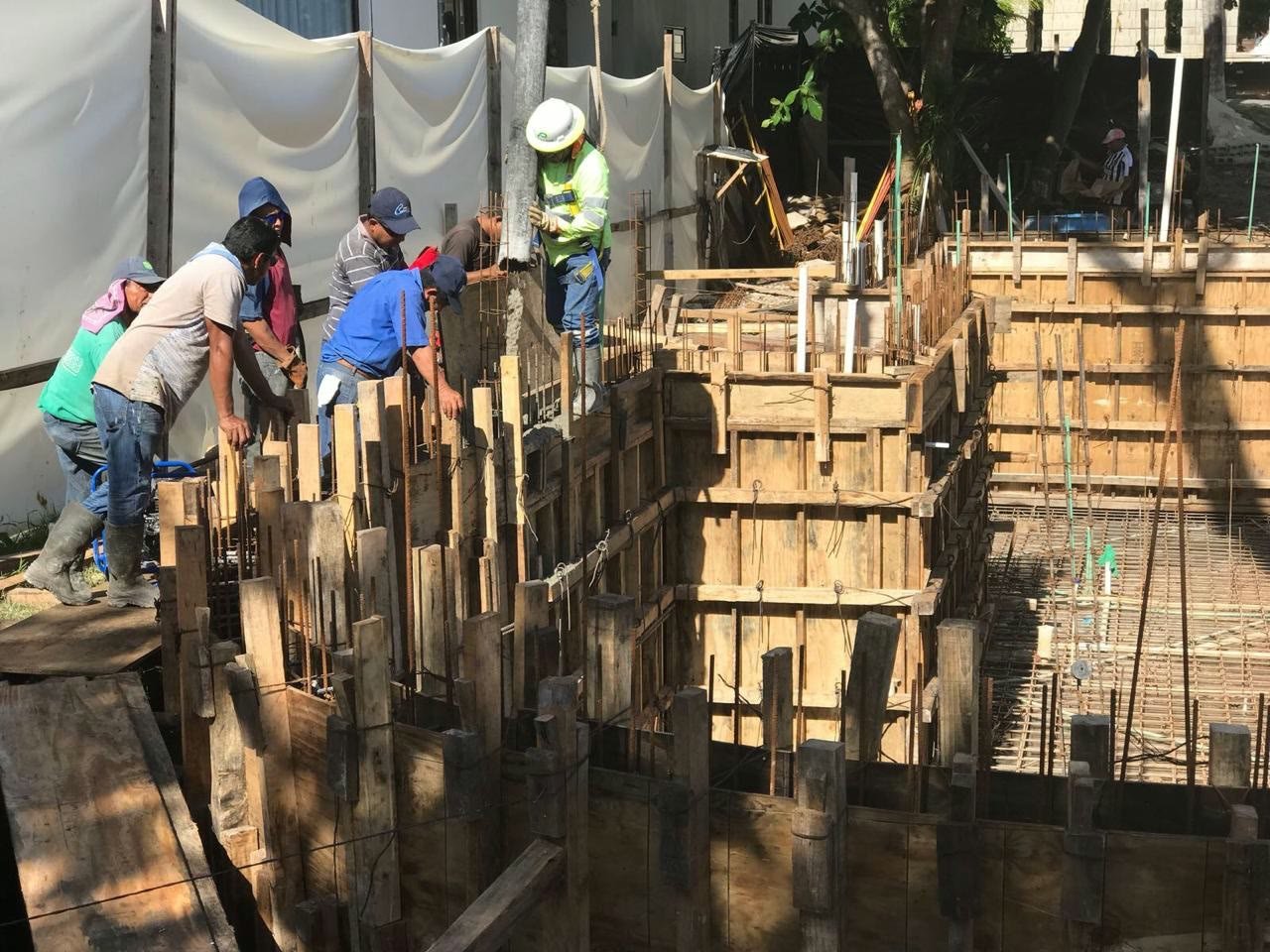
Building underground near the Caribbean Sea.
The Riviera Maya is one of the most desirable places in Mexico to build a luxury home. With its beautiful beaches, tropical climate, and extraordinary natural surroundings, the region attracts homeowners from across North America. However, the same environment that makes this coastline so appealing also creates significant engineering challenges.
Unlike many inland locations, the Riviera Maya sits on a predominantly limestone geological formation with an extensive underground water system. Groundwater levels can be relatively shallow, particularly in areas close to the Caribbean coastline.
For homeowners planning a basement, underground parking garage, wine cellar, mechanical room, or other below-grade space, this creates an important question: how do you build a structure underground when the surrounding ground contains water?
This was precisely the challenge we encountered on one of our residential construction projects near the beach in Playa del Carmen. The client wanted a basement incorporated into the property. The location was attractive, but its proximity to the Caribbean Sea introduced complications that required considerably more than conventional concrete construction.
As excavation progressed, we reached the groundwater table. At that point, the project was no longer simply about excavating and pouring a foundation. We were constructing a below-ground space that needed to remain protected in an environment where water could exert pressure against the surrounding structure.
The solution required a carefully considered combination of structural engineering, material selection, insulation, and waterproofing.
Why basements in the Riviera Maya require special attention.
The water table is the underground level at which soil and rock become saturated with groundwater. Its depth varies depending on location, geology, rainfall, seasonal conditions, and proximity to coastal water systems. In much of the Riviera Maya, the porous limestone allows water to move through underground formations. This creates conditions very different from those encountered in many parts of the United States and Canada.
When a basement extends below the groundwater table, water can exert hydrostatic pressure against its walls and floor. That pressure is important because water does not need a large visible opening to create a problem. It can penetrate poorly constructed joints, cracks, porous concrete, and inadequately sealed penetrations.
Over time, uncontrolled moisture intrusion can contribute to several problems:
- Persistent dampness and elevated indoor humidity.
- Damage to interior finishes and stored belongings.
- Corrosion of embedded or exposed metal components.
- Deterioration of materials affected by repeated moisture exposure.
- Mold growth where suitable conditions develop.
- Expensive repairs requiring excavation or access to buried structural elements.
The challenge becomes even greater in coastal environments, where groundwater and surrounding soils may contain chlorides that can accelerate corrosion of inadequately protected steel reinforcement.
For this reason, constructing a basement near the Caribbean Sea should never be approached as an ordinary foundation project. It requires engineering that considers the conditions surrounding the structure throughout its intended service life.
Excavation and preparing the structural foundation.
The first phase involved excavating the site to establish the basement's required depth and configuration. As the excavation progressed, the groundwater conditions became a central consideration in how the structure would be built.
The construction photographs show the extensive temporary wooden formwork, reinforcing steel, and concrete placement involved in creating the below-grade structure. These are not simply temporary construction details. Proper formwork and reinforcement placement are essential to achieving the intended structural geometry and performance.
The basement required reinforced concrete elements capable of resisting the loads associated with the surrounding ground and the building above.
Working in a confined excavation also introduces practical difficulties. Workers must coordinate concrete placement around dense reinforcement, temporary supports, and structural intersections. Access can be limited, and the sequence of construction becomes especially important.
In the photographs, our crew can be seen placing concrete through a pumping system into the reinforced structure. This approach allowed concrete to be delivered into areas where conventional placement would have been difficult.
The objective was to create a strong, continuous structural foundation for the waterproofing and protective systems that would follow.
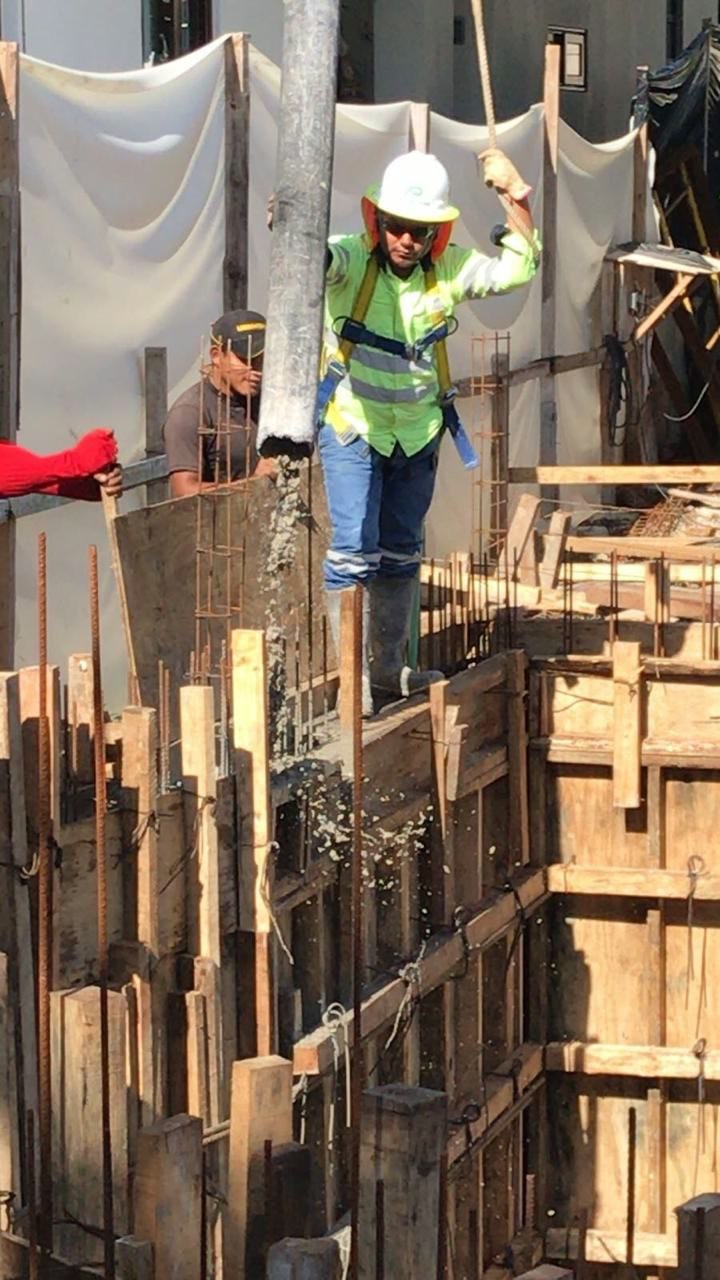
Why we used marine-grade concrete.
One of the most important decisions on this project was the selection of concrete suitable for the coastal environment. Concrete is often assumed to be waterproof simply because it is hard and solid. That assumption can lead to expensive mistakes.
Conventional concrete contains microscopic pores, and its resistance to water penetration depends on factors such as mixture design, placement, consolidation, curing, and cracking. In coastal construction, concrete must also be evaluated for its resistance to chloride exposure. Chlorides can penetrate inadequately protected concrete and eventually reach embedded steel reinforcement. Under the right conditions, corrosion can develop, potentially causing expansion, cracking, and deterioration of the surrounding concrete.
For this project, PlayaBuilder selected marine-grade concrete as part of the basement's primary protective barrier.
Marine-grade concrete is designed for demanding exposure conditions where moisture and potentially corrosive substances are important considerations. Its performance depends on the specific mixture and construction practices, but the objective is to create a dense, durable structure with improved resistance to water and chloride penetration.
Using the appropriate concrete was particularly important because much of the finished structure would eventually be buried. Once construction was completed, accessing these elements for major repairs would be extremely disruptive and costly.
This is where experienced builders make decisions that have consequences decades into the future. A less expensive concrete mixture might reduce initial construction costs, but those savings can become insignificant if the structure develops water intrusion or reinforcement corrosion problems later.
Our philosophy is straightforward: use materials appropriate for the actual environment, not simply the least expensive materials that can complete the job.
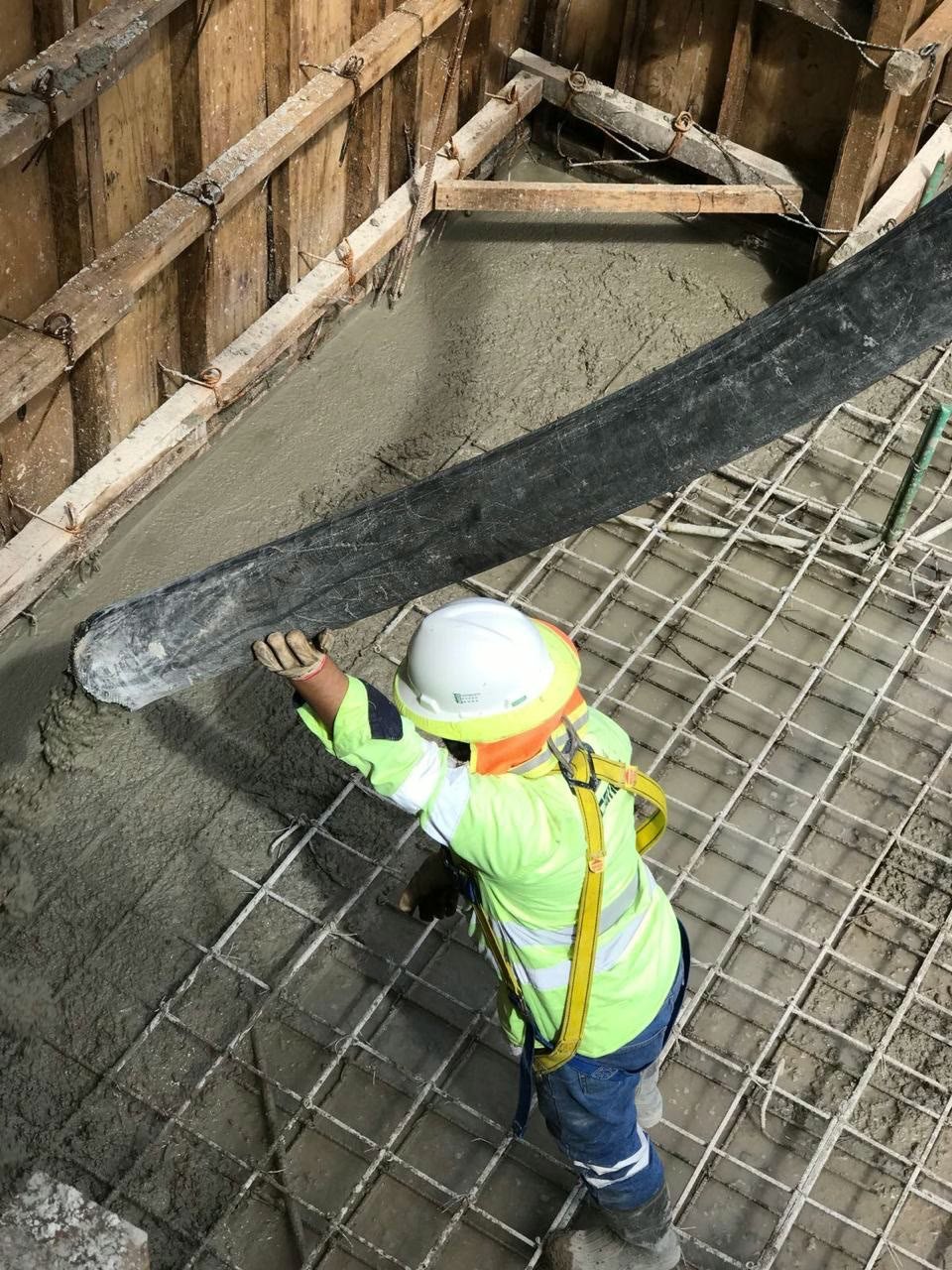
Neoprene as an additional protective layer.
After establishing the structural concrete barrier, the project incorporated neoprene insulation as another component of the protective system.
Neoprene is a synthetic rubber material valued for its flexibility, resilience, and resistance to moisture under suitable applications. In construction, appropriately specified neoprene products can provide separation, cushioning, and protective functions depending on their design and placement. For this basement, neoprene was incorporated as an insulating and protective layer within the overall assembly.
This was an important distinction in our approach. We did not rely on one material to perform every function. The reinforced concrete provided the structural foundation. The neoprene contributed an additional layer of protection, while the dedicated waterproofing system addressed resistance to water entry.
Using complementary materials allows each component to serve its intended purpose. That approach is especially valuable in underground construction, where the structure must contend with changing environmental conditions and the consequences of water exposure.
High-performance waterproofing.
The final critical component was the application of a premium waterproofing system. This was essential because even high-quality concrete should not automatically be treated as a complete waterproofing solution for a basement exposed to groundwater.
Waterproofing is particularly important at construction joints, transitions between floors and walls, and locations where pipes or other services penetrate the structure. These areas can become vulnerable points if they are not properly detailed and protected.
For this project, PlayaBuilder used a high-end waterproofing solution designed to provide another substantial barrier against water infiltration. The objective was to create a below-grade structure with multiple layers of protection rather than depending exclusively on the concrete itself.
In practical terms, the protective strategy consisted of three complementary components:
Together, these components formed a comprehensive approach to protecting the basement from its surrounding environment.
The precise performance of any below-grade waterproofing assembly depends on its design, installation, joint detailing, groundwater conditions, and ongoing structural integrity. For that reason, material quality and installation workmanship are equally important.
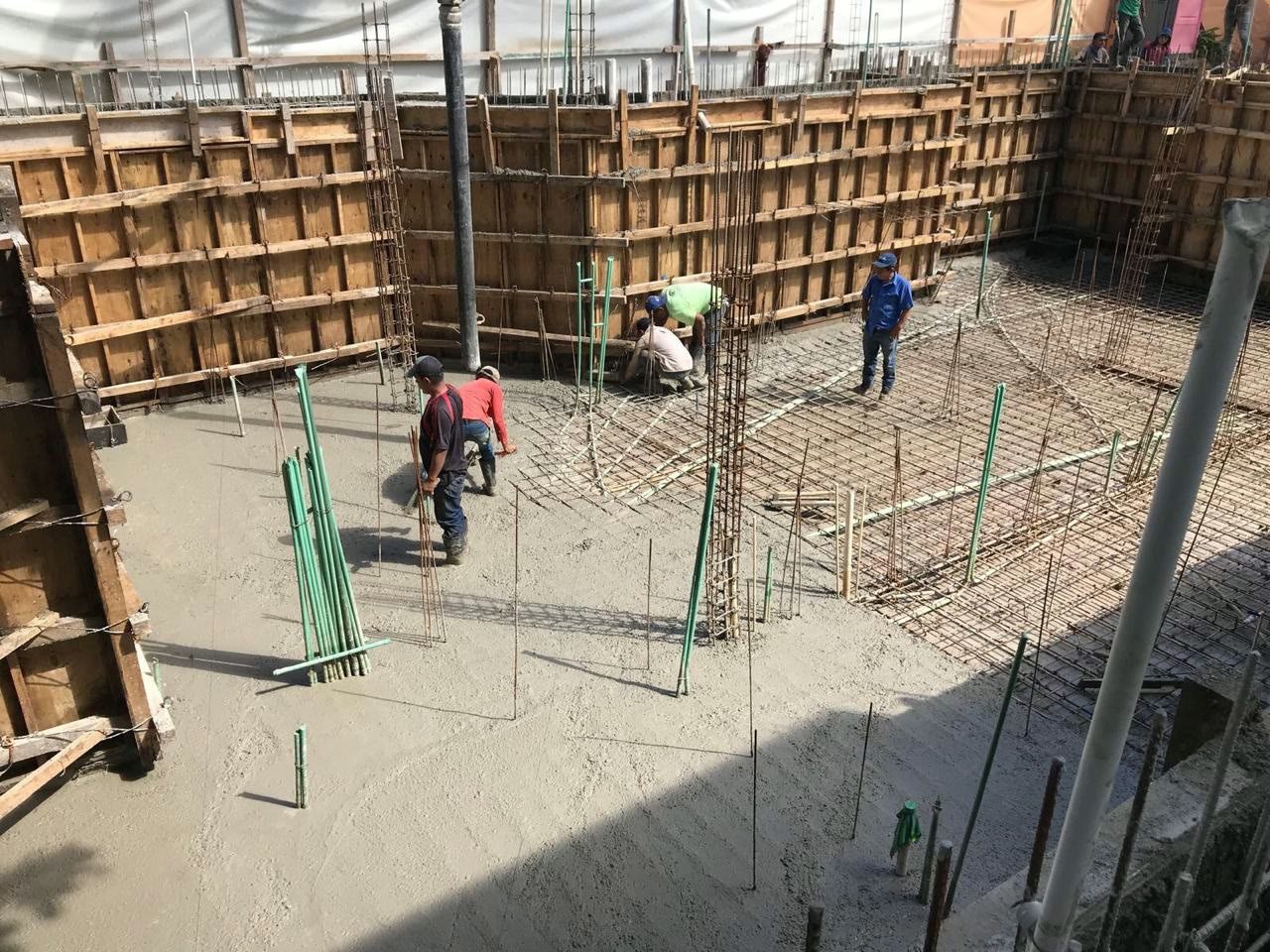
Three factors make coastal basement construction particularly challenging.
Building below ground in Playa del Carmen is not necessarily impossible, but it demands a different level of planning than conventional above-ground residential construction.
Groundwater pressure
When groundwater surrounds a basement, the structure must be designed to withstand the resulting lateral and upward forces. Water pressure can act against the walls and beneath the floor slab. Depending on the depth and groundwater conditions, uplift forces may become a significant structural consideration. These loads must be accounted for in the engineering design rather than addressed only through waterproofing materials.
Salt and corrosion exposure
The coastal environment introduces additional durability concerns. Chloride exposure can affect reinforcing steel, metal connections, and other susceptible components. Proper material selection, concrete quality, reinforcement protection, and construction detailing all contribute to long-term durability.
The cost of getting it wrong
A waterproofing problem in an above-ground wall may sometimes be relatively accessible to repair. A waterproofing failure several feet underground is a different matter. Repairing a buried basement wall may require extensive excavation, removal of landscaping or exterior improvements, and specialized remedial work. In some situations, access to the original waterproofing assembly may be severely restricted.
This is why the most economical time to build a properly protected basement is during its original construction.
What the photographs cannot fully show.
The photographs from this project show an active construction site with multiple workers coordinating concrete placement, reinforcement, and formwork. What they cannot fully show is the amount of planning and supervision required behind the scenes.
Underground concrete construction requires careful coordination between structural design, reinforcement installation, concrete delivery, placement, and subsequent protective treatments. An error in one stage can compromise the effectiveness of work completed later. For example, high-quality waterproofing cannot compensate for every structural defect or poorly detailed construction joint. Similarly, excellent concrete materials will not deliver their intended performance if they are improperly placed or cured.
At PlayaBuilder, we believe the quality of construction depends on both the materials selected and the people responsible for installing them.
This is particularly important for international homeowners. Many of our American and Canadian clients are not physically present in Mexico throughout the construction process. They depend on us to make informed decisions, coordinate qualified trades, and protect their interests when they cannot personally inspect every stage.
Our responsibility extends well beyond making a finished home look attractive. It includes ensuring that the structural and protective systems hidden behind the walls and beneath the floors receive the same attention as the visible architecture.
A basement engineered for its environment.
This project demonstrates how a challenging site condition can be addressed through thoughtful engineering and appropriate construction materials.
The client wanted a basement near the Caribbean Sea. The excavation encountered the groundwater table, creating conditions that required a specialized construction approach. Rather than relying on ordinary concrete and a basic waterproofing treatment, PlayaBuilder incorporated marine-grade concrete, neoprene insulation, and a premium waterproofing system.
The finished underground structure was designed with multiple protective layers intended to resist water intrusion and the demanding conditions of its coastal location.
The photographs document the extensive reinforced concrete work required to create that structure, including the formwork, steel reinforcement, concrete pumping, and placement operations. They also illustrate an important principle of high-quality construction:
The most valuable improvements to a home are not always the ones you can see.
A beautiful kitchen, imported stone floor, or custom-designed swimming pool may attract immediate attention. But the engineering beneath the home is what helps protect that investment over the long term.
The conditions beneath your property deserve as much consideration as the design above it.
If you are considering building a custom home in Playa del Carmen, Playacar, Puerto Aventuras, Tulum, or elsewhere along the Riviera Maya, the conditions beneath your property deserve as much consideration as the architectural design above it. This is especially true when planning underground spaces, beachfront construction, or structures in areas with shallow groundwater.
Before committing to a design, the site should be evaluated for its geological and groundwater conditions, with engineering appropriate to the proposed construction.
Not every property will require the same solution. Some sites may accommodate below-grade construction relatively easily. Others may require specialized structural systems, groundwater management, or additional waterproofing measures. In certain locations, an underground basement may not be the most practical option.
An experienced local construction team can help identify these considerations early, before they become expensive surprises.
At PlayaBuilder, we have been building homes in the Riviera Maya since 2005. Our experience has taught us that successful construction in this region requires more than applying building methods that work elsewhere. It requires understanding the local environment, selecting suitable materials, and making decisions based on long-term performance.
Protecting the investment begins long before the finishes.
A home in the Riviera Maya is a significant investment, and protecting that investment begins long before the finishing materials are installed.
This basement project is an example of our approach to construction: understand the challenge, develop an appropriate solution, use quality materials, and supervise the work carefully.
Whether we are building a custom luxury residence, designing a complex foundation, or undertaking a major renovation, our priorities remain the same.
- Quality construction.
- Clear communication.
- Transparency.
- Long-term durability.
Building a basement near the beach.
It is not necessarily impossible, but it demands a different level of planning than conventional above-ground construction. The site should be evaluated for its geological and groundwater conditions first. Some sites accommodate below-grade construction relatively easily, others need specialized structural systems, groundwater management or additional waterproofing, and in certain locations a basement may not be the most practical option.
No. Conventional concrete contains microscopic pores, and its resistance to water depends on mixture design, placement, consolidation, curing and cracking. Even high-quality concrete should not be treated as a complete waterproofing solution for a basement exposed to groundwater.
Near the sea, groundwater and soils may contain chlorides that can reach the steel reinforcement and cause corrosion, cracking and deterioration. Marine-grade concrete is designed for those exposure conditions, with the objective of a dense, durable structure with improved resistance to water and chloride penetration.
With three complementary layers: marine-grade reinforced concrete as the structural barrier, neoprene insulation as an additional protective component, and a premium waterproofing system as a dedicated barrier against groundwater penetration.
During its original construction. Repairing a buried basement wall later may require extensive excavation, removal of landscaping or exterior improvements, and specialized remedial work.
See a related service or guide.
Considering building a custom home in Playa del Carmen or the Riviera Maya?
Contact PlayaBuilder to discuss your project with a team that understands the unique challenges of building in Mexico's Caribbean coastal environment.
+52 984 187 3579 · info@playabuilder.com