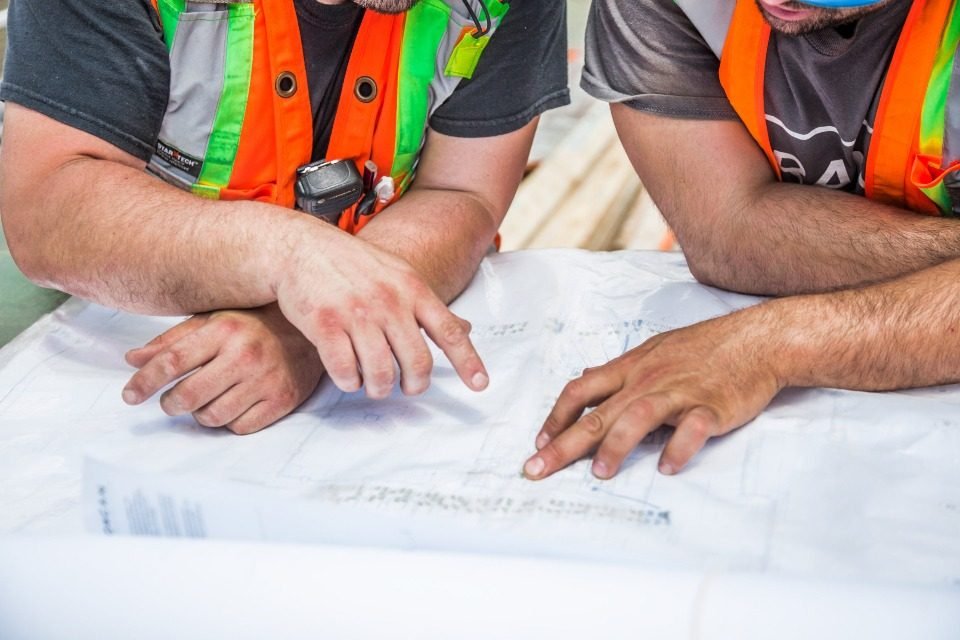
How Should Construction Progress Be Verified Before a Homeowner Releases Payment in Mexico?
By Andres Garcia — Civil Engineer & Construction Cost Specialist, PlayaBuilder
The technical answer
A progress payment should correspond to defined work that has been measured, checked against the approved scope, and accepted under the contract. A photograph of a partially completed room is evidence that activity occurred; it is not, by itself, proof of the quantity or contractual value of completed work.
The appropriate verification method depends on the payment arrangement. An advance, a calendar-based installment, and a payment against measured quantities are different financial instruments. The owner should identify which mechanism the contract actually uses before asking whether an invoice is justified.
Establish a measurable baseline
Start with the approved drawings, specifications, cost schedule, and schedule of quantities. Break large categories such as “structure” or “finishes” into items that a supervisor can physically verify. Typical units might be cubic meters of concrete, square meters of plaster, linear meters of pipe, or installed equipment counted by unit.
An approved quantity is not automatically an installed quantity. For example, a budget may contain 120 square meters of floor finish while only 75 square meters have been installed and accepted. The measurable progress for that item would be 75 divided by 120, or 62.5%, subject to any contract-specific rules for materials stored on site.
Measure quantity and quality separately
An installed quantity can fail acceptance if the material or workmanship does not meet the agreed specification. The site record therefore needs at least two distinct judgments: how much work exists and whether that work is acceptable. Concealed installations need inspection records before they become inaccessible.
The most useful record ties each measured quantity to its drawing location, measurement date, inspector, test or photo evidence, and any unresolved deficiencies. A generic statement that an item is “almost done” cannot support a reliable estimate.
Reconcile the payment certificate
For a unit-price contract, a simplified calculation is accepted installed quantity multiplied by the contractual unit rate, adjusted for agreed retentions, advances, and approved modifications. A fixed-price contract may instead use agreed milestones or percentages. These mechanisms should not be mixed without explicit agreement.
Consider an illustrative item of 100 square meters at MXN 900 per square meter. If 70 square meters have been installed and accepted, the measured gross value is MXN 63,000. This is an arithmetic illustration, not a PlayaBuilder project rate or a statement about any particular contract.
Account for materials and change orders
Materials delivered but not installed may have payment value only if the agreement expressly permits it and the materials can be identified, protected, and accounted for. Procurement invoices alone do not establish that the planned construction work has been completed.
Maintain separate columns for original contract value, approved changes, previously certified work, current accepted work, amounts already paid, and the remaining balance. Without that reconciliation, the same progress can accidentally be counted twice.
What an owner should request
A defensible payment packet contains the measurement sheet, dated progress photographs mapped to specific locations, inspector or project-manager signoff, evidence of required tests, a list of open deficiencies, and a calculation that reconciles with prior certificates.
For foreign homeowners reviewing a project remotely in Playa del Carmen, the objective is not more photographs. It is traceability: every amount requested should point to a contractual item and an objectively reviewable status.
Define the payment mechanism before measuring work
A milestone payment and a unit-price progress payment answer different questions. In a milestone arrangement, the contract may establish that a fixed sum becomes due when a precisely described stage is completed. For a unit-price arrangement, the amount due generally depends on quantities measured and accepted at contract rates. For a lump-sum schedule of values, the certificate may instead assess the proportion of each defined work package completed. These methods should not be mixed casually. A contractor may have incurred considerable expenditure without reaching a contractual payment trigger, while a completed contractual milestone may justify payment even if expenditure records are not supplied. The agreement determines which evidence is relevant.
A project team should prepare a payment matrix before work begins. Each row should identify the pay item, pricing basis, inspection hold point, acceptance evidence, person authorized to sign, and treatment of previously paid advances. Payment rules for materials stored off site need particular attention because possession, insurance, damage risk, and title may differ. None of these provisions should be improvised when an invoice arrives. Andres's cost-control approach begins with a definition that makes two independent reviewers likely to reach the same result.
Quantities should be reproducible
A measurement record needs a location reference and an explicit rule for deductions. Consider wall plaster measured in square meters. The gross elevation area, opening deductions, returns, and finish termination points can all change the measured area. A payment certificate that merely states “plaster: 80 percent” is difficult to audit. A measured sheet specifying elevation A3, length, height, deducted openings, and accepted net area can be checked independently. Similar logic applies to excavated volume, reinforcement mass, cable runs, and equipment counts, although the appropriate conventions vary by contract.
Inspection and measurement are separate actions. An element may exist but remain subject to testing, documentation, or correction. A completed installation with unacceptable dimensions cannot automatically be valued as compliant work. For partly completed assemblies, define whether partial valuation is allowed and what it covers. A waterproofing system, for example, might include substrate preparation, membrane placement, detailing, protection, and testing. Counting the membrane area alone can overstate the amount of accepted work if essential components remain unfinished.
A worked payment reconciliation
Assume a hypothetical measured-work item has a contract quantity of 120 m² at MXN 850/m². Previously certified accepted work totals 45 m². A new inspection measures 32 m² installed during the period, but 5 m² remain unaccepted pending correction. Cumulative accepted work becomes 72 m²: 45 + 32 − 5. The cumulative gross value at the contract rate is MXN 61,200. The current-period gross certificate is MXN 22,950: 27 × 850. That amount is not necessarily the cash payable because retention, tax, advance recovery, and prior adjustments may apply.
The reconciliation should visibly distinguish gross work value from cash movement. If a payment register records only transfers, it cannot demonstrate whether the certified quantity was correct. Conversely, if it records only installed work, it may omit credits for advance payments or amounts already released. The practical safeguard is a cumulative certificate that shows the previous certified value, new accepted value, approved variations, deductions authorized by contract, and net balance. This example illustrates arithmetic, not a prescribed payment or tax mechanism in Mexico.
Evidence hierarchy for remote owners
Evidence has different strengths. A photograph establishes that something visible was present at a particular recorded time, assuming provenance is reliable. A marked drawing identifies location. A signed quantity sheet records a measurement and acceptance decision. A test report may establish whether a specified material or assembly met a defined criterion. A supplier invoice establishes a commercial transaction, not necessarily installed quantity or quality. No single document does all these jobs. Combining them is more persuasive than multiplying the number of photographs.
A remote homeowner should receive a concise certificate summary supported by an audit trail rather than a large unsorted image folder. Where disputes arise, the team should be able to locate the applicable drawing revision, corresponding measurement, evidence, and contractual rate without reconstructing the entire history from email. This approach is equally useful to contractors: it reduces ambiguity regarding the amount of work accepted and the balance remaining to be certified.
Exceptions and disputed work
Unresolved work should be carried on an exceptions register with its location, deficiency, responsible party, agreed corrective action, and reinspection date. The register should distinguish a quality dispute from a quantity dispute. A disagreement about how many meters were installed is different from a disagreement about whether the installed specification complies. If a contract permits partial certification of disputed items, the rule should be applied consistently and documented. An owner's unilateral refusal to pay all work because one item is defective may not match the payment terms.
The most valuable control is contemporaneous documentation. Measuring a slab edge before subsequent work covers it, for example, can be far easier than reconstructing the measurement later. Cost management does not eliminate disagreement, but it can make disagreements smaller, more specific, and more resolvable. Andres's conclusion is straightforward: payment certification should reflect the agreed contract, verified quantities, verified acceptability, and a transparent cumulative ledger.
How a monthly certificate can be tested for consistency
A payment certificate should be traceable in two directions. Starting with the submitted amount, the reviewer should be able to identify the contract item, its accepted measured quantity, the applicable unit rate, and the inspection record. Starting with a completed construction element, the reviewer should likewise be able to find its measurement and determine whether it has been invoiced already. This bidirectional test is a practical way to detect omitted work, duplicate claims, and items billed before acceptance.
For a hypothetical wall item measured in square meters, assume an approved contract quantity of 180 m² at MXN 1,250 per m². The original item value is MXN 225,000. If 72 m² were accepted in previous certificates and another 36 m² are accepted this month, the cumulative accepted amount is 108 × 1,250 = MXN 135,000. The current gross earned value for that item is 36 × 1,250 = MXN 45,000, before any applicable contractual deductions. It would be incorrect to bill 108 m² again as current progress. It would also be incorrect to infer that 60% of every wall-related activity is complete merely because 108/180 equals 60% for this particular item.
The reviewer should record the measurement date, plan revision, physical location, acceptance status, and evidence used. If a quantity changes because drawings were revised, the change should be reconciled separately against the approved contract mechanism. Work that physically exists but fails inspection may require a different accounting status from accepted work. That distinction matters because a payment certificate is not simply a photographic progress report.
For remote homeowners, one practical arrangement is a monthly reconciliation meeting at which the cost specialist and site representative review the same worksheet. Unresolved items should be listed with the amount affected and a responsible person, rather than carried silently into the next period. The exact approval and payment procedure remains governed by the signed contract.
Conclusion
Payment verification is a control process, not a judgment of whether a contractor appears busy. Define the measurable scope, record the accepted quantities, document deficiencies, and reconcile the financial record.
The more clearly a construction contract defines quantities and acceptance conditions, the easier it becomes to distinguish legitimate progress from expenditure that has not yet produced accepted work.
For custom home construction and construction management in Playa del Carmen and the Riviera Maya, see the PlayaBuilder website.
Related reading
Illustrative calculations are hypothetical and must not be used as project designs or quotations.
Editorial note: Published technical methods are informative; the approved drawings, contract, and applicable requirements govern each project.
About the author
Andres Garcia is a civil engineer and construction cost specialist at PlayaBuilder in Playa del Carmen. He has approximately ten years of experience in structural engineering, construction estimating, budget controls, and project coordination in Argentina and Mexico. He holds a civil engineering degree from Universidad Tecnológica Nacional and completed postgraduate specialization in Structural Engineering at Universidad Nacional de Rosario. He joined PlayaBuilder in 2023.