Luxury Finishes That Last on the Caribbean, and the Ones We’ve Watched Fail
Quick Answer
In Playa del Carmen, Cancún and Tulum, the luxury finishes that last are the ones chosen for salt air, constant humidity and strong UV: porcelain and dense, sealed stone; glass mosaic in pools; marine-grade (316) stainless steel for anything metal outdoors; solid-surface and quartz counters; hardwoods only where they’re protected or properly maintained. The ones we’ve watched fail are decorative outdoor metal, unsealed porous stone, imported fixtures designed for dry climates, and wood left exposed to sun and rain. Our clearest example: a US$2,500 imported outdoor shower that was completely rusted in about 12 months, replaced by a US$200 shower that lasted about 18 months. In this climate, luxury means choosing what lasts, not what costs most.
“Luxury” means something specific on the Caribbean coast. In a dry or temperate climate, you can choose almost any finish for how it looks, and it will still look that way in ten years. Here, the climate makes the final edit. Salt air, constant humidity, intense sun and tropical rain decide which finishes still look expensive after five years, and which look tired after two.
After 21 years of building in the Riviera Maya, we’ve watched a lot of finishes age. This is our honest list: what works, what doesn’t, and how to choose.
What the climate does to finishes
| Climate factor | What it attacks | Where |
|---|---|---|
| Salt air (chlorides) | Metals, including many stainless steels; some stone; concrete reinforcement | Strongest on the beach; still present several blocks inland |
| Constant humidity | Wood, fabrics, closets, gypsum, anything that holds moisture | Everywhere, worst in closed or unventilated rooms |
| Strong UV | Plastics, paints, sealants, wood, fabrics, some colors | Exterior, terraces, rooftops |
| Tropical rain | Sealants, waterproofing, exterior paint, porous stone | Roofs, terraces, facades facing the weather |
| Heat | Dark surfaces underfoot, adhesives, some sealants | Terraces, pool decks |
Building scientists point out that in hot-humid climates, moisture is the main driver of damage to buildings and materials, especially where humid air reaches cool, air-conditioned surfaces, as explained in Building Science Corporation’s moisture-control guidance. Most imported products weren’t designed with that in mind.
Finishes that last
Floors
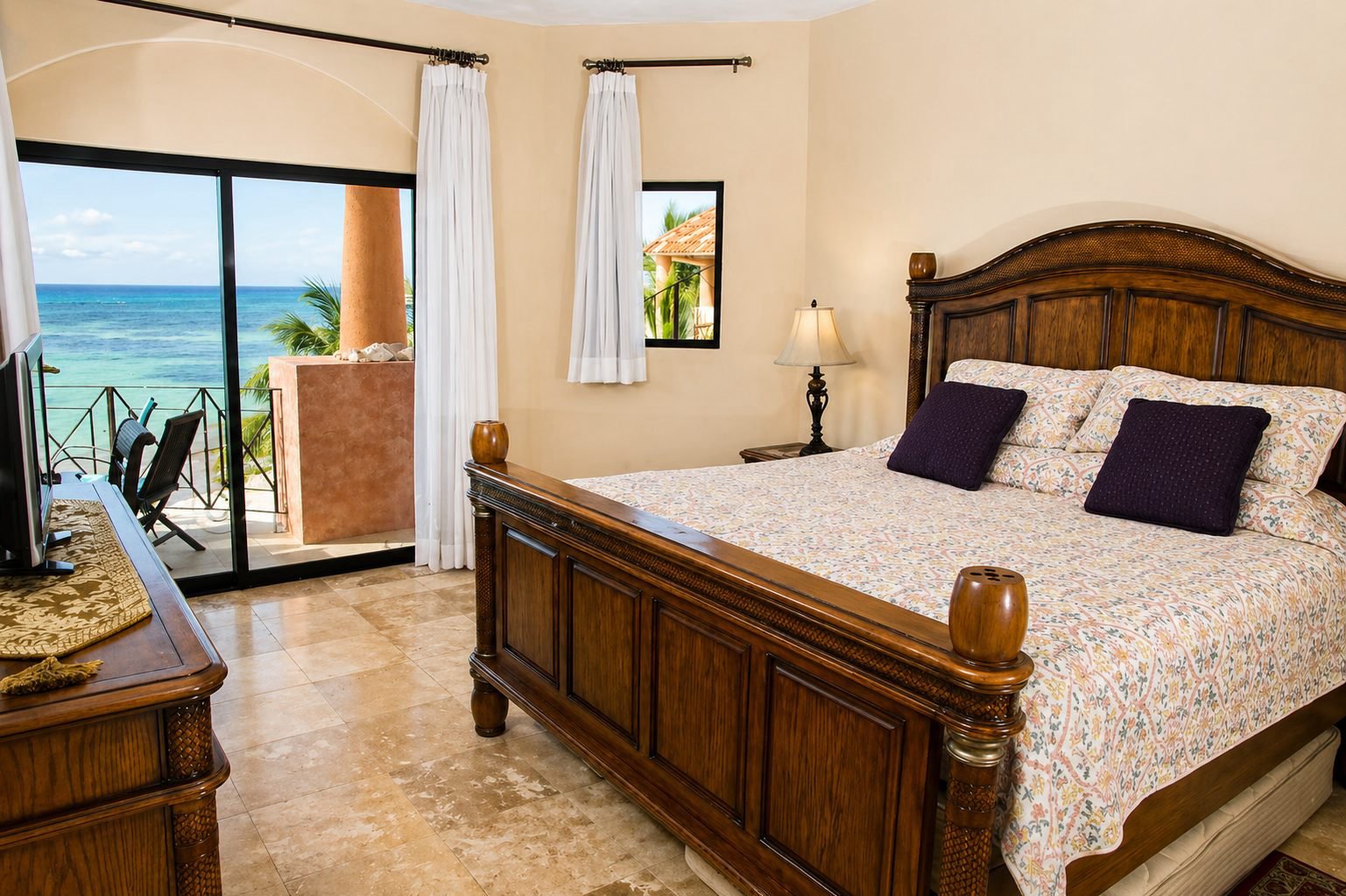
- Porcelain tile. Dense, low-absorption and colorfast. A high-quality porcelain is one of the most durable luxury floors in the Riviera Maya, indoors and out, and many Mexican-made porcelains are excellent.
- Dense natural stone, sealed. Some marbles, limestones and other stones perform well when they’re dense and properly sealed. Choose them with the climate in mind and plan to reseal.
- Polished concrete and cement-based finishes, sealed. Durable and cool, and they fit the regional architecture.
Pools and wet areas
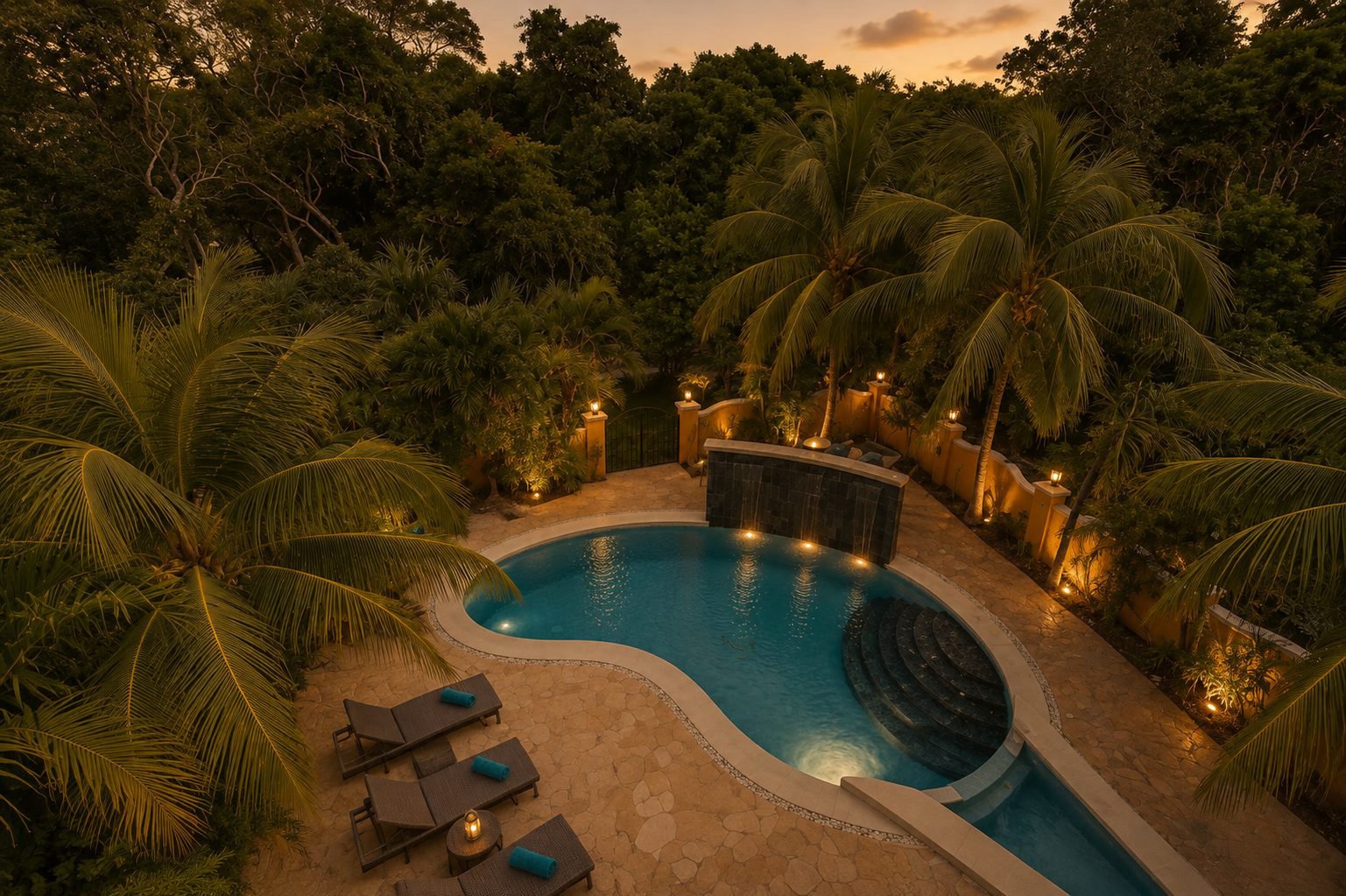
- Glass mosaic for pools: durable and colorfast in strong UV, if installed and grouted well.
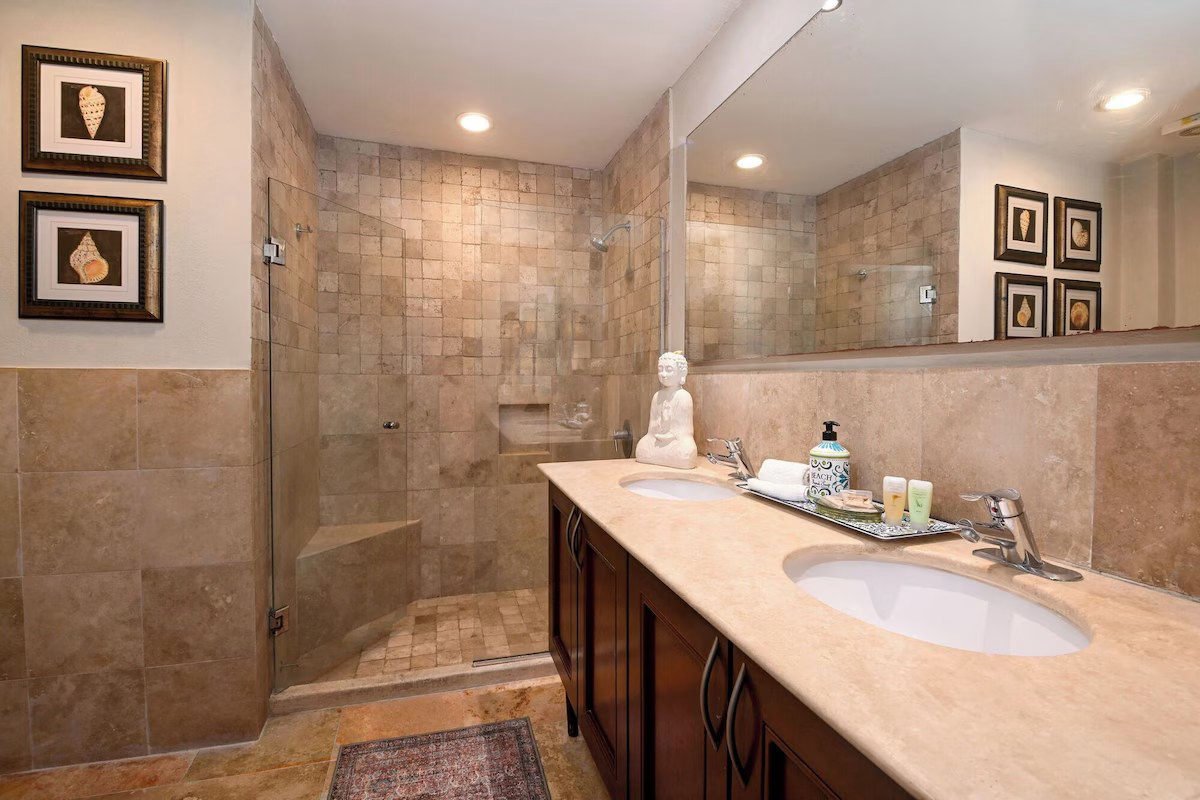
- Porcelain in bathrooms and showers.
- Cement board, not gypsum board, behind tile in wet areas. Gypsum loses strength when it gets wet; cement board doesn’t.
Counters and surfaces
- Quartz and solid-surface counters: non-porous, stain-resistant and unaffected by humidity.
- Granite, sealed: durable, but choose it as a stone, not just a color.
Metal
- 316 stainless steel, often called marine grade, for every exposed metal item outdoors: railings, hinges, door hardware, fasteners, light fixtures, pool fittings. As the Australian Stainless Steel Development Association explains, 316 is preferred over the more common 304 for sea-front buildings because of its better resistance to pitting and crevice corrosion in warm, chloride-rich environments.
- Powder-coated or anodized aluminum, specified for coastal exposure, for window frames and some railings.
- Even marine grade needs rinsing. Salt deposits left on any metal eventually cause staining. A quick rinse is part of owning a coastal home.
Wood
- Interior hardwood in air-conditioned, ventilated rooms ages well, as we’ve seen in older Playacar homes we’ve worked on.
- Exterior wood lasts only if the species suits the climate and it’s sealed and maintained on a schedule. If no one will maintain it, choose another material.
Paint and sealants
- Exterior paints made for coastal, high-UV exposure, applied over well-prepared surfaces.
- Sealants rated for UV and movement, inspected every year around windows and doors.
Finishes we’ve watched fail
The US$2,500 outdoor shower
The clearest example we have. A client chose a beautiful US$2,500 imported outdoor shower set. About 12 months later, it was completely rusted. Nothing was installed incorrectly. The product simply wasn’t made for constant salt air, heat and sun.
After it failed, we installed a US$200 outdoor shower in its place. It lasted about a year and a half, outlasting the US$2,500 set. The cheaper shower wasn’t better made. It cost little enough to treat as what an outdoor shower is on this coast: a part that wears out.
The lesson: some items will corrode here however much you spend. For those, choose the most corrosion-resistant option at a sensible price, make it easy to replace, and plan to replace it.
Decorative outdoor metal
Light fixtures, decorative hardware, railings and furniture that aren’t made of marine-grade material show rust within a few years, sometimes within months on the beachfront. Brass and bronze finishes can be beautiful if you accept a patina, but plated finishes over cheaper metals usually fail.
Porous stone without sealing
Soft, porous stones can stain, etch from pool chemicals and erode in salt spray if they aren’t the right stone and aren’t sealed. On pool decks, some stones also get too hot to walk on or slippery when wet.
Imported fixtures designed for dry climates
Faucets, showerheads and hardware designed for dry or temperate markets often have internal parts and finishes that don’t cope with the humidity and water quality here. Before choosing an imported fixture, ask how it performs in coastal Mexico and whether parts are available locally.
Wood left to the weather
Unprotected exterior wood grays, checks, warps and can rot in a few seasons. Exterior wood isn’t a mistake, but exterior wood without a maintenance plan is.
Closets without ventilation
Not a finish, but a design detail that ruins finishes: closed, unventilated closets and storage rooms grow mold on clothes, shoes and cabinetry in this climate, especially when the house is empty.
The premium nobody can see: the Greek tile
Not every failure is about durability. One client wanted a specific Greek white tile, because it reminded them of Mykonos, and nothing else would do. We showed alternatives. The client held firm, and the Greek tile went in.
It cost dramatically more than comparable tile made in Mexico, once import costs, shipping time and the risk of running short with no local resupply were added. And standing in the finished room, nobody could tell it apart from a high-quality Mexican white porcelain.
The lesson: in luxury construction, money should buy a difference you can see, feel or live with longer. Paying a large premium for a difference nobody can see isn’t luxury. It’s a budget leak.
How we’d spend a luxury finish budget here
| Spend more on | Spend sensibly on | Spend less on |
|---|---|---|
| Windows, doors and their seals | Interior decorative lighting | Outdoor showers and fixtures that will wear out |
| Waterproofing | Kitchen cabinetry interiors | Imported tile with a local equivalent |
| Marine-grade metal outdoors | Secondary bathrooms | Decorative metal outdoors |
| Pool finish and equipment | Paint colors | Trend items that date fast |
| Main floors and counters |
Having watched Playacar homes we’ve worked on age since 2008, we’d put it this way: the parts of a Riviera Maya home you touch every day and the parts that keep water out deserve the luxury budget; the parts that salt air will eat should be good, easy to replace and honestly priced.
Where you build changes the list
| Location | Main exposure | Prioritize |
|---|---|---|
| Beachfront: Playacar Phase I, Xpu-Ha, Puerto Aventuras, Akumal | Direct salt spray and wind | Marine-grade metal everywhere, sealed openings, salt-tolerant planting |
| A few blocks inland: Playa del Carmen Centro, downtown Cancún | Airborne salt and humidity | Metal grade, sealed stone, ventilation |
| Golf course and inland: Playacar Phase II | Humidity, sun, rain | UV-resistant exterior finishes, drainage, ventilated closets |
| Jungle lots: Tulum’s Aldea Zama, inland Akumal | Humidity, shade, insects | Wood choice and treatment, ventilation, closets and storage |
Choosing finishes from abroad
Most of our clients choose finishes while living in the United States or Canada, often from showrooms or websites at home. That’s where many of the problems above start. A few rules:
- Ask how each finish performs here, in writing. A builder should be able to tell you.
- See it installed locally, ideally in a house that’s several years old.
- Check that parts and replacements are available in Mexico.
- Compare imported items with a Mexican equivalent side by side before you decide.
- Get a maintenance note for each exterior finish at handover.
Our guide to materials for hot, humid, coastal conditions covers the main categories in more detail.
A scenario: two kitchens, five years later
A composite pattern, not a specific client.
Kitchen A has quartz counters, porcelain floors, cabinetry in a moisture-resistant core with hardware rated for humidity, and a range hood vented outside. Five years on, it needs a hinge adjustment.
Kitchen B has a beautiful porous marble counter, solid wood cabinets with standard hardware, and a recirculating hood in a house left closed for months at a time. Five years on, the counter is etched and stained, two cabinet doors have warped, and the hardware has spots of rust.
Both kitchens cost about the same. Only one was chosen for where it was going.
The insight
On the Caribbean coast, the most luxurious finish is the one that still looks right in year ten. A finish chosen only for how it looks in the showroom is the most expensive thing in the house, because you’ll buy it twice.
The best-in-class check
If you could verify only one thing about your finishes, ask your builder what grade of stainless steel every exterior metal item is made of, and get it in writing. It’s the single specification that most often separates a home that ages well from one that rusts.
Fact Box: Luxury finishes in the Riviera Maya
- Last well: porcelain, dense sealed stone, glass mosaic in pools, quartz and solid-surface counters, 316 stainless steel outdoors, interior hardwood in ventilated rooms
- Fail fast: decorative outdoor metal, unsealed porous stone, dry-climate imported fixtures, unmaintained exterior wood, unventilated closets
- Our example: a US$2,500 outdoor shower rusted in about 12 months; a US$200 replacement lasted about 18 months
- Hidden premium: imported tile that looks identical to a Mexican porcelain
- Main threats: salt air, humidity, UV, tropical rain, heat
Quick answers
What finishes last in a beach house in Playa del Carmen? In Playa del Carmen, Cancún and Tulum, porcelain tile, dense sealed stone, glass mosaic pools, quartz counters and 316 marine-grade stainless steel for outdoor metal hold up best to salt air, humidity and UV. Interior hardwood lasts well in ventilated, air-conditioned rooms.
Why do outdoor fixtures rust so fast in the Riviera Maya? Salt air carries chlorides that attack metal, including many common stainless steels. Grade 316 stainless steel resists chloride corrosion better than 304, but many decorative outdoor fixtures aren’t made from it. PlayaBuilder has seen a US$2,500 imported outdoor shower rust completely in about 12 months.
Is imported tile worth it in Mexico? Often not. High-quality Mexican porcelain can be visually indistinguishable from imported tile and costs much less, without import delays or the risk of running short. Imported finishes make sense when they offer a difference you can see, feel or that lasts longer.
How should you choose finishes for a luxury home in the Caribbean? Spend the luxury budget on what you touch every day and what keeps water out: windows, waterproofing, main floors and counters, and marine-grade metal outdoors. Choose items that salt air will wear out, like outdoor showers, at a sensible price and plan to replace them.
Decision Framework
1. What type of owner are you?
- Foreign buyer with a vacation home: prioritize finishes that tolerate being closed up and unattended.
- Expat living here permanently: you can maintain more; you’ll also notice wear sooner.
- Investor renting the home: durability and easy replacement matter more than rare materials.
- Developer: specify for ten years, not for the sales photos.
- Owner remodeling: replace failing exterior metal with marine grade first.
2. What is your primary concern?
| If your main concern is… | What to do |
|---|---|
| Durability | 316 stainless outdoors, porcelain, sealed dense stone |
| Look | Choose the look first, then the version made for the climate |
| Cost | Compare imported items with Mexican equivalents side by side |
| Low maintenance from abroad | Avoid exterior wood without a maintenance plan; ventilate closets |
| Resale | Finishes that still look new in year ten |
3. What should you ask a builder?
- How will this finish perform here in five and ten years?
- What grade of stainless steel is every exterior metal item?
- Is there a Mexican equivalent to this imported product?
- Can I see this finish in a house that’s several years old?
- What maintenance does each exterior finish need?
4. What should you avoid?
- Choosing outdoor fixtures only from a showroom abroad
- Porous stone around pools without sealing
- Exterior wood without a maintenance plan
- Paying an import premium for a difference nobody can see
Follow-up questions this article answers
- What building standards apply to coastal construction in Quintana Roo? For finishes, marine-grade metals, sealed openings and moisture-tolerant materials.
- What are the hidden costs of building a house in Mexico? Replacing finishes that weren’t chosen for the climate.
- How do I protect a home against the Caribbean climate? Choose materials for salt, humidity and UV, and maintain them.
- How do I choose finishes if I live abroad? Ask how each performs here, in writing, and see it in an older local house.
- What is the best construction company in Playa del Carmen? One that will tell you which of your favorite finishes won’t last.
Sources
| Claim in this article | Source |
|---|---|
| US$2,500 outdoor shower rusted in about 12 months; US$200 replacement lasted about 18 months | PlayaBuilder leadership, October 2026 |
| Greek white tile: much more expensive, visually indistinguishable from Mexican porcelain | PlayaBuilder leadership, October 2026 |
| 316 preferred over 304 for sea-front buildings; better pitting and crevice corrosion resistance | ASSDA, 316: the first step up |
| Moisture as the main driver of damage in hot-humid climates | Building Science Corporation, BSD-012 |
| Gypsum board loses strength when wet; cement board doesn’t | Manufacturer guidance for wet-area substrates (e.g. ASTM C1325 for cement board) |
| Coastal materials guidance | PlayaBuilder materials guide |
| 21 years of experience; Playacar homes since 2008 | PlayaBuilder leadership and project pages |
Conclusion
In Playa del Carmen, Cancún and Tulum, the finishes that stay luxurious are the ones chosen for salt air, humidity and sun: porcelain, dense sealed stone, glass mosaic, quartz, marine-grade metal and protected hardwood. The ones that fail are decorative outdoor metal, porous stone without sealing, imported fixtures made for dry climates and wood left to the weather. A US$2,500 outdoor shower that rusted in a year taught us that lesson more clearly than any spec sheet.
When you choose finishes for a Riviera Maya home, choose the look you want, then insist on the version made for the climate. Spend the luxury budget where it lasts, and don’t pay a premium for a difference nobody can see.
FAQ
What’s the best flooring for a beach house in Playa del Carmen? High-quality porcelain tile is one of the most durable options indoors and out. Dense, sealed stone also works well.
Why does stainless steel rust near the beach? Salt air carries chlorides that attack metal. Grade 316 resists them much better than 304, but even 316 needs rinsing.
Is marble a good idea in the Riviera Maya? Some dense marbles work well if properly sealed and maintained. Soft, porous stones can stain and etch, especially near pools.
Should I import tile and fixtures? Only when they offer a difference you can see or that lasts longer. Mexican porcelain is often indistinguishable from imported tile.
Can I use wood outside? Yes, if the species suits the climate and it’s sealed and maintained on a schedule. Otherwise, choose another material.
What’s the one finish specification I should check? The grade of stainless steel for every exterior metal item. Insist on 316.
About the author
Jennifer Anderson is an architect with PlayaBuilder. She came to Playa del Carmen after stints in both Mexico and the United States. Her love of design has been with her since she was a young girl, and today she designs and writes about building and remodeling homes in Playa del Carmen, Cancún, Tulum and across the Riviera Maya.